
When I think about rosary prayer, I usually picture a small, familiar set of beads resting in the palm of my hand. For me, sterling silver rosary beads have slowly become that familiar companion. They are not flashy or loud, but they feel solid and trustworthy, the way a well-loved door handle or an old family photo frame feels when you touch it.

Over time, silver rosaries tend to carry the quiet marks of the person who uses them: a bit of darkening around the crucifix, a soft shine where the fingers pass bead after bead. There is something comforting about that. The metal itself doesn’t make anyone holier, of course, but it can gently remind us that prayer is not an idea floating in the air. It happens in real moments, with real hands, in real homes and cars and hospital rooms.
Why sterling silver feels different in the hand
Compared with plastic or wood, sterling silver rosary beads feel cool at first touch and then slowly warm as you pray. That small physical change can help settle the mind. When my day is busy and my thoughts are scattered, just feeling the coolness of the first bead under my thumb is sometimes enough to nudge me into a more focused space.
Silver has a certain weight that is noticeable but not heavy. It is light enough to slip easily into a pocket or a small pouch, yet substantial enough that you know it is there. For some people, that gentle weight is a way of remembering that God is present even in the middle of errands, meetings, or housework. The rosary stays with you without drawing attention to itself.
Many sterling silver rosaries also use metal chains and links that are less likely to snap under normal use. This can matter for someone who prays the rosary daily, carries it in a backpack or purse, or tends to wrap the beads around their hands. It is not about having something expensive, but about having something dependable.
Personal moments with sterling silver rosary beads
The first time I used sterling silver rosary beads regularly was during a season when someone close to me was very ill. The rosary I had then was simple: small beads, a plain crucifix, and a modest center medal. I did not choose it for any special reason. It simply happened to be the one I reached for one night at the hospital, and it stayed in my pocket afterward.
I remember sitting in a dim waiting room, the kind with quiet television news and vending machines humming in the background. I pulled the rosary from my pocket, and the beads were almost cold. As I began the first decade, the silver slowly warmed, and it felt like my worry and restlessness were being poured into the rhythm of the prayers. Nothing dramatic happened. There were no sudden answers. But there was a sense that I was not alone in that room.
Years later, the same sterling silver rosary bears little signs of that time: a bit of tarnish, a bent link that I had repaired, and a smoother feel on a few of the beads I held most often. Whenever my fingers find those particular beads, I remember that hospital and the quiet way prayer carried me through it.
How sterling silver rosaries fit into daily American life
In the United States, Catholic life is woven into busy schedules, long commutes, and homes that don’t always have a dedicated prayer corner. Because of that, many people choose rosaries that can handle being tossed into a cup holder, slid into a jeans pocket, or kept in a work bag. Sterling silver rosary beads tend to fit naturally into that reality.
Some keep a silver rosary in the car, hanging gently from the rear-view mirror or tucked into a small case. Others leave one in a nightstand drawer, ready for those quiet minutes before bed. Parents might keep a rosary in a diaper bag or stroller pocket, praying a decade while waiting at a playground or in a parking lot outside the grocery store.
These ordinary scenes are where the rosary most often lives. The beauty of sterling silver here is subtle: the beads do not break as easily, the chain holds up to daily handling, and the look of the metal stays respectful even when the rest of life feels messy or rushed.
Things to notice when choosing sterling silver rosary beads
If you are considering sterling silver rosary beads, it can help to think less about style and more about how and where you will actually use them. Some points you might quietly reflect on:
- Bead size: Larger beads are easier to hold, especially for older hands or anyone with joint pain. Smaller beads are discreet and pocket-friendly.
- Chain strength: Look for rosaries that describe reinforced links or durable construction, especially if you plan to carry it daily.
- Crucifix design: Some prefer very simple crucifixes; others appreciate a more detailed one. Either way can be prayed with reverently.
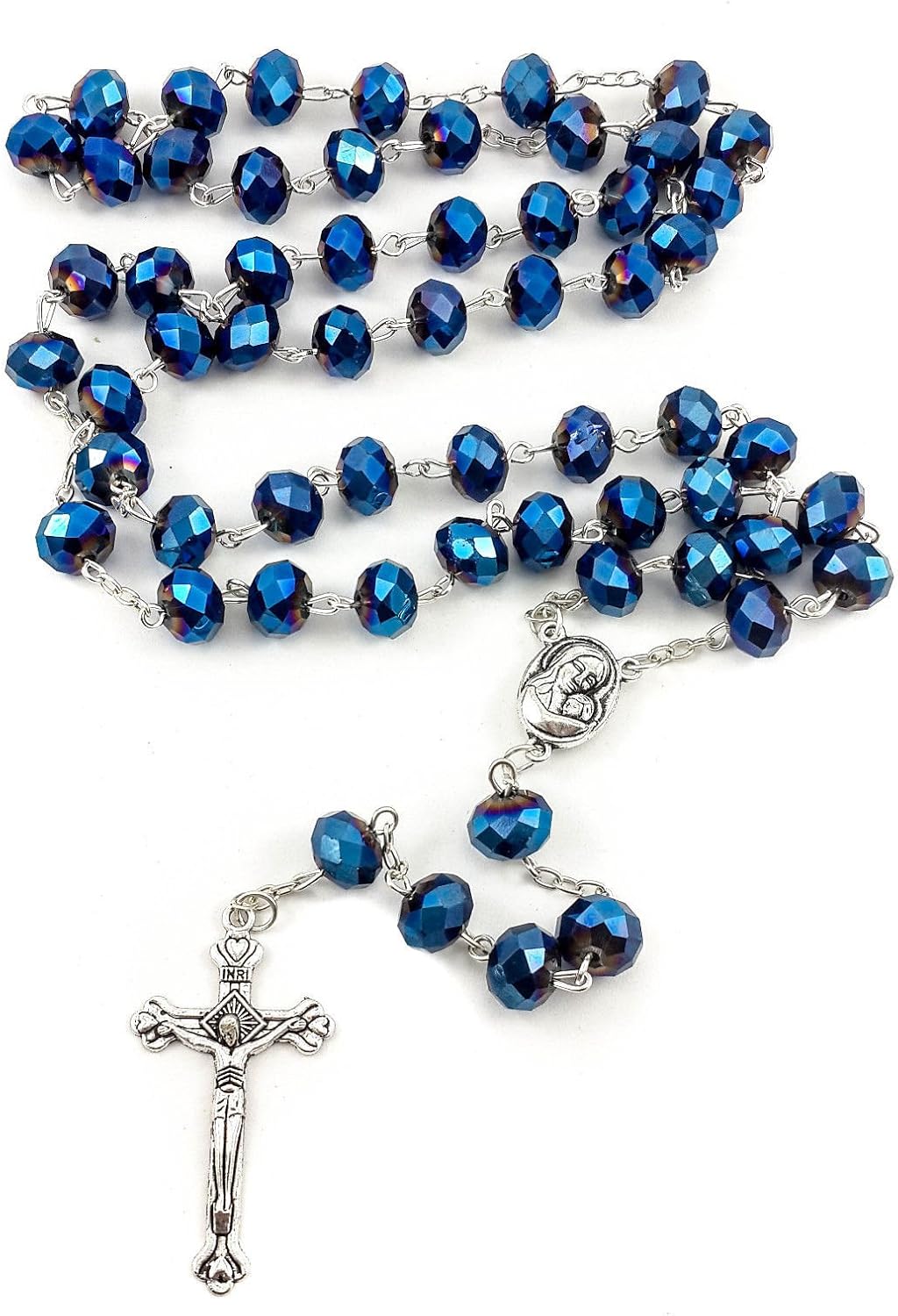
- Centerpiece: Many sterling silver rosaries include an image of Our Lady, the Sacred Heart, or a particular devotion. You might choose one that feels close to your own story.
- Finish and shine: High-polish silver reflects more light, while a more matte or antiqued finish tends to hide small scratches and tarnish.
None of these details are essential to prayer itself, but they can make it easier to reach for the rosary again and again. When the beads feel natural in the hand, there is one less obstacle between intention and starting that first Hail Mary.

Caring for sterling silver rosary beads
Silver naturally darkens over time. For many of us, that gentle tarnish is part of the rosary’s story and not something to worry about. Some people like their beads bright and shiny, while others prefer the softened, aged look that comes from regular use. Either way is completely fine.
If you do want to care for your sterling silver rosary beads more actively, you might consider:
- Keeping the rosary in a small pouch or case when in a bag with keys or sharp objects.
- Wiping the beads occasionally with a soft cloth to remove skin oils and restore a bit of shine.
- Avoiding harsh chemicals or cleaners that could damage the metal or any attached medals.
- Handling knots or loose links gently, or asking a jeweler to repair them if needed.
My own silver rosary has gone through spills, drops, and time in overstuffed backpacks. A soft cloth and a bit of patience have usually been enough to keep it in good shape. The slight darkening in some areas does not bother me; it feels more like a record of the prayers said with it.

Gifting sterling silver rosary beads
Sterling silver rosaries are often chosen as gifts for sacraments, anniversaries, or special moments: a First Communion, a confirmation, a wedding, or a milestone birthday. Because silver is both modest and lasting, it feels appropriate for serious occasions without drawing attention to cost or status.
When giving a rosary, many people like to include a simple handwritten note. It does not need to be long. A single line such as “I will remember you in prayer when I use mine” or “May this accompany you in quiet moments with God” can mean more than many paragraphs. The rosary then becomes less of an object and more of a shared habit of prayer.
I still have the sterling silver rosary I received as a confirmation gift. At the time, I did not fully understand what it meant, but the person who gave it to me wrote a brief message about praying one decade for me whenever they thought of that day. For years afterward, that note echoed in my mind whenever I picked up the beads. It reminded me that faith grows slowly, often with the quiet support of others.

Praying simply with sterling silver rosary beads
The heart of all this, of course, is not the metal itself but the prayer. For many Catholics, holding a physical rosary makes it easier to stay grounded in the mysteries of Christ’s life. Sterling silver rosary beads offer a tactile anchor without demanding attention. They do not glow or sparkle loudly; they just sit quietly in the palm, ready whenever we are.
On days when prayer feels distant, I sometimes begin with very small steps: I reach for the rosary first and decide only to pray one decade. Often, that is all I manage, and that is alright. The silver beads moving through my fingers are a reminder that prayer is not about performance or productivity. It is simply about showing up as we are.
On other days, when there is more peace or time, the rosary can stretch into a full set of mysteries. Either way, the same beads are there. After a few months or years, they become associated with those quiet moments in a very personal way. Just seeing them on a nightstand or next to a favorite chair can gently invite the heart to turn toward God, even for a minute.
Balancing tradition and everyday reality
Catholic tradition holds the rosary as a long, steady path of prayer traveled by many souls before us. For American Catholics today, that same path winds through office cubicles, school parking lots, small apartments, and crowded suburbs. Sterling silver rosary beads can bridge those two worlds: they honor the seriousness of the prayer while fitting practically into our daily routines.
There is a certain beauty in knowing that the same kind of metal used for wedding rings, heirloom medals, or old chalices is also used in the beads we quietly finger in traffic or at a bedside. It connects the solemn and the ordinary. We do not need to understand all the theology behind the rosary to experience that connection. Simply picking it up, one bead at a time, is enough.

Over the years, as I have used different rosaries, I have noticed that the ones I return to most are not always the most ornate. Instead, they are the ones that feel honest in my hand and strong enough to survive real life. Sterling silver rosary beads often fall into that category. They hold up to tearful nights, joyful celebrations, long drives, and quiet afternoons in front of a window.
Whether you are choosing your first silver rosary or considering one as a gift, it may help to think of it less as a special object and more as a simple tool that might accompany you for years of ordinary prayer. If, over time, its surface shows the marks of that journey, that can be something to receive with gratitude.
