
Praying with Pope John Paul II in Everyday Life
When I first picked up a rosary that had an image of John Paul II on the center medal, I was surprised by how familiar it felt. I remembered watching him as a child during World Youth Day broadcasts, his voice carrying across crowds, inviting people to pray and not be afraid. Holding Pope John Paul II Rosary Beads in my hands today brings those memories quietly back, not in a dramatic way, just as a gentle nudge toward prayer.
For many of us in the United States, life moves quickly: commuting, kids’ activities, work, family responsibilities. Carving out time for structured prayer can feel challenging. A rosary connected to John Paul II does not solve that tension, but it can offer a simple, concrete reminder to pause. Sliding the beads through your fingers at a red light or on a lunch break can be a way of saying, “Lord, I am here,” even for a minute or two.
John Paul II was known for his deep devotion to the Rosary. If you have ever read about his life, you might know how often he turned to Mary in prayer, especially in difficult times. I find it comforting to remember that when I feel distracted, tired, or uncertain, I am not the first person to bring those struggles to God with a rosary in hand. He did the same, over and over, through decades of priesthood and then as pope.
What Makes Pope John Paul II Rosary Beads Distinctive
Rosaries connected to John Paul II typically share a few features that set them apart from a simple, plain rosary. Many have a center medal with his image, sometimes with his papal coat of arms or a small inscription. Others might include a small charm, a papal crucifix, or colors associated with his homeland of Poland or with the Vatican.
These details are not necessary for the prayer itself, of course, but they can help focus your intention. When I pick up my own John Paul II rosary, I find myself spontaneously whispering a short prayer like, “Saint John Paul II, please pray with me today,” before I even begin an Our Father. The physical design of the beads gently leads my heart in that direction.

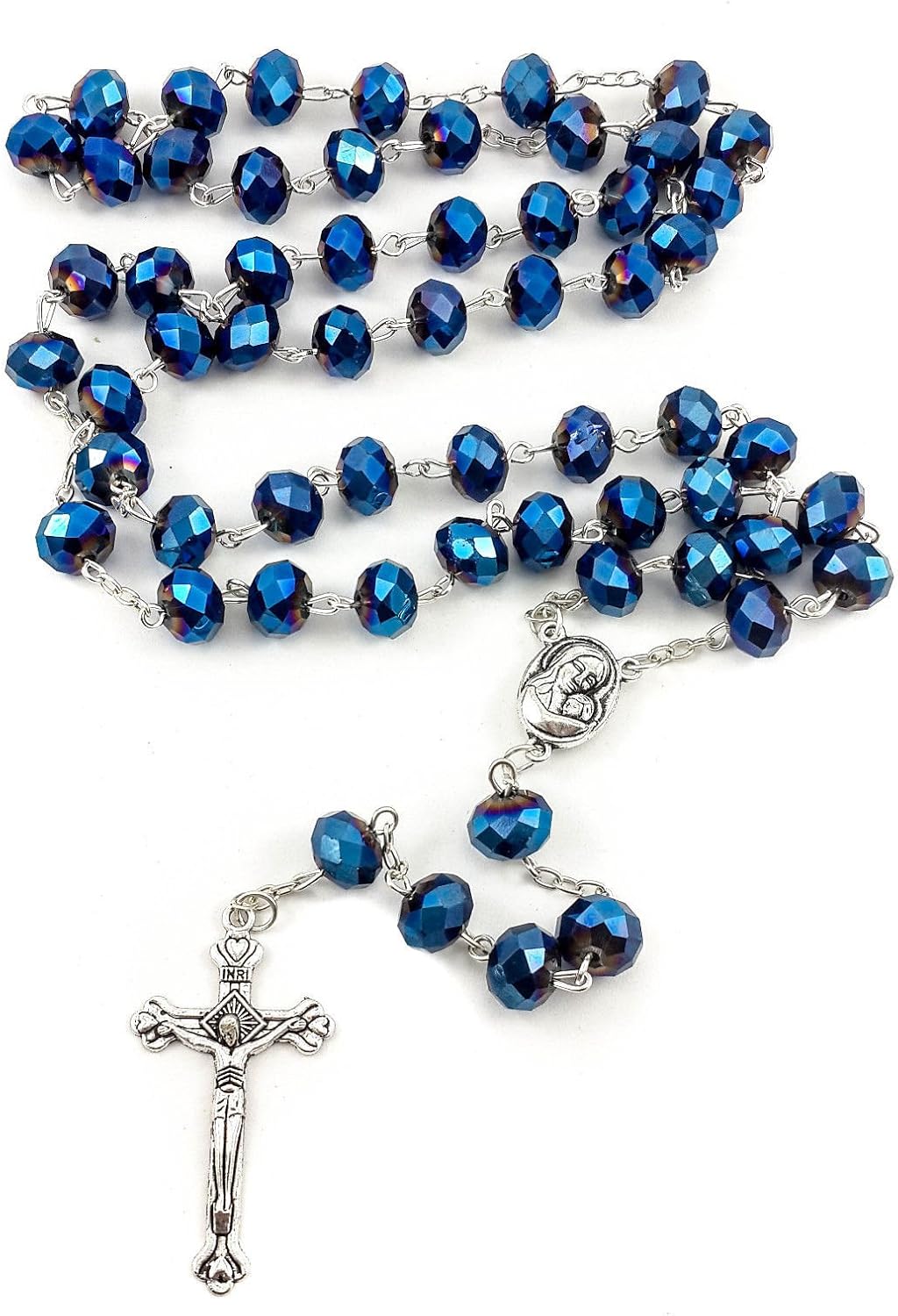
Some people prefer simple wood beads that feel warm and natural. Others are drawn to glass or crystal beads that catch the light. I have one John Paul II rosary with humble brown wooden beads and a very modest medal. I keep it in my car’s center console. It has become the rosary I reach for when I am stuck in traffic and tempted to grow impatient. Just wrapping it around my fingers cools my reactions and brings me back to what matters.
Simple Ways to Use These Beads During the Week
You do not need to be an expert in prayer to use Pope John Paul II Rosary Beads. In fact, I think they are especially helpful for people who feel a bit rusty or intimidated by the Rosary. John Paul II often spoke about not being afraid. I keep that in mind whenever I feel like I am “not praying well enough.”
1. Keeping a Rosary Nearby at Home
One practical idea is to place your John Paul II rosary somewhere you naturally pass several times a day: on a small dish near the front door, on a side table in the living room, or in a drawer by your bed. When you see it, you might pause long enough to pray a single decade, or even just one Hail Mary with attention.
In my house, I keep mine on a bookshelf near the couch. Often, after dinner when the house is finally a little quieter, I sit down, pick up the beads, and pray a decade for one person who comes to mind. Some nights I finish a full Rosary. Other nights I barely get through a few Hail Marys before I am too tired. Either way, the presence of the rosary itself reminds me that God is near, even in my fatigue.

2. Bringing the Rosary into Your Commute
Many Americans spend a good amount of time in the car. A Pope John Paul II rosary can rest in a cup holder, glove compartment, or hanging from the rearview mirror (as long as it does not block your view). For me, this has turned frustrating moments—like long red lights or traffic jams—into unexpected opportunities for quiet prayer.
I remember one particularly stressful day, driving home after receiving some difficult news. I reached for the rosary in my console almost without thinking. Holding the crucifix and the image of John Paul II, I did not even manage a full mystery. I simply repeated, “Jesus, I trust in you,” with my fingers on each bead. That moment did not fix my circumstances, but it helped me feel less alone with them.
3. Using the Beads for Short “Check-Ins” with God
We sometimes imagine the Rosary as an all-or-nothing prayer: either all five decades or nothing at all. While praying the full set is beautiful, it is also possible to use your Pope John Paul II Rosary Beads as a way of pausing for very short “check-ins” with God throughout the day.
For example, I often keep my rosary on my desk when I am working from home. Between tasks, I might pick it up and pray a single Hail Mary slowly, or simply kiss the crucifix and ask for the grace to do my work honestly and patiently. That small gesture helps me stay rooted when email and deadlines start to feel overwhelming.

Family, Children, and Quiet Traditions
Many American parents and grandparents remember John Paul II as “their pope.” Introducing Pope John Paul II Rosary Beads to younger family members can be a gentle way of sharing that memory, not as a history lesson, but as a living connection to the Church’s story.
Sometimes, on Sunday evenings, I sit with my children and we pray one decade together. They do not always listen perfectly, and sometimes someone gets restless or distracted. But they like to look at the little image of John Paul II on the medal and ask who he was. I share a simple story—how he loved young people, how he traveled the world to encourage them, how he loved Jesus and Mary. Those small stories slowly become part of their memory of faith.
Over time, these small family practices form a kind of quiet tradition. The rosary becomes more than just an object; it carries birthday prayers, exam worries, sickness, moments of gratitude, and late-night tears. When the beads also remind us of John Paul II, they carry the echo of his life of prayer as well.
Choosing a Style That Fits Your Life
Because rosaries come in so many designs, it helps to think practically about how you plan to use your Pope John Paul II Rosary Beads. A delicate, glass-beaded rosary might be better suited for a bedside table or a prayer corner, while a sturdy wooden or metal one might be better for pockets, backpacks, or glove compartments.
I personally keep one more “formal” rosary near my nightstand, and a simpler, tougher one in my coat pocket. Both are associated with John Paul II, but in different ways—one with a detailed medal and one with a plain metal portrait. This allows me to bring the same intention into very different parts of my day.

If you have sensitive hands or arthritis, bead size and texture can make a difference. Larger beads can be easier to hold and move between the fingers. Smooth wood is often more comfortable than sharp-edged crystal. Taking a moment to consider these simple details can help your rosary feel like a true companion rather than just an ornament.
Rooted in the Church’s Memory
When we use Pope John Paul II Rosary Beads, we are not only drawing closer to a beloved pope; we are also standing inside a much older stream of Christian prayer. The Rosary itself, of course, long predates John Paul II. The devotion has grown gradually over centuries, shaped by the prayer of countless ordinary believers and by the reflection of the saints.
John Paul II added his own mark by deeply encouraging the Rosary and by introducing the Luminous Mysteries to help us meditate on the public life of Christ. If you want to place these beads into a broader context of Christian history, it may help to read a bit about the history of the Rosary itself, seeing how this simple chain of beads carries so much memory and faith.

Knowing that generations of Catholics have turned these same prayers over in their hands—sometimes in joy, sometimes in fear, sometimes in grief—can make our own struggles feel less isolated. A rosary linked to John Paul II simply anchors that wider tradition in a face and a voice many of us remember personally.