Ireland Rosary Beads
When many of us hear “Ireland Rosary Beads,” a few images tend to rise up: worn wooden beads in a grandmother’s hand, a small cross hanging from a bedpost, or a quiet corner of the house where someone sits to pray at the end of a long day. Irish rosaries often carry that mixture of faith and family story. They are not just decorations; they are something you reach for when you do not quite know what to say to God, but you still want to show up.

I still remember the first time I held a set of Ireland Rosary Beads that actually came from Ireland. A friend had brought them back from a trip to County Kerry. The beads were a deep green, with a small shamrock on the centerpiece. What struck me most was not the design, though, but the way they felt in the hand—solid, familiar, and somehow already part of my own routine. Over time those beads began to mark ordinary moments: a short decade prayed in the car before work, a decade after dinner, or a quiet rosary in the evening when the house finally settled.
That is the heart of an Irish rosary: not performance, not show, but a steady, humble way of turning back to God during regular life. You do not need to pray perfectly. You do not need to feel anything special. You simply take the beads, breathe, and begin. The weight and shape of the beads can help guide your fingers when your mind is scattered, and the cross at the end is a reminder that even a simple Hail Mary is a step toward Christ.
The Irish character of the rosary
Irish rosaries carry symbols that many American Catholics recognize from family stories: the shamrock, the Celtic cross, the Claddagh ring, and Gaelic inscriptions. These details trace back to a country where faith often had to survive in quiet ways—through home prayer, folk traditions, and the stubborn hope of families who refused to let the faith disappear. Many Irish Catholics, and their descendants in the United States, learned the rosary not in a classroom but at the kitchen table or during evening family prayers.
One relative told me that in her childhood home in Boston, the rosary was “just what we did when things were hard.” When someone was sick, when the news was worrying, when money was tight, her mother would take out a simple set of green beads and say, “Let’s give this to Our Lady.” No speeches, no big explanations. Just beads, faith, and a little bit of stubborn trust. That kind of story repeats itself again and again in Irish-American families.
Typical materials in Ireland Rosary Beads
Many Ireland Rosary Beads draw from the natural beauty and symbols of the island. Common materials and themes include:
- Green glass beads echoing the Irish landscape
- Wooden beads, sometimes from Irish trees
- Celtic knot designs on the crucifix
- Shamrock centerpieces recalling St. Patrick
- Claddagh symbols of love, loyalty, and friendship
- Sturdy metal links for regular use
- Stone or marble beads with natural variations
- Gaelic words or short prayers on medals
These touches do not change the rosary itself—it is still the same prayer known across the Church—but they can help someone feel “at home” with their beads. Especially for Irish-Americans, there is a kind of quiet comfort in holding something that carries both faith and heritage at once.
How Ireland Rosary Beads fit into everyday American life
In the United States, Irish-style rosaries show up in many ordinary places: slipped into a pocket on the way to work, hanging from a rear-view mirror, resting on a nightstand, or tucked into a backpack. They can become a simple, steady companion for daily life.
A few ordinary ways people often use them:
- Praying a decade on a short walk after dinner
- Keeping them in the car for quiet moments in traffic or before appointments
- Holding them during sleepless nights or anxious thoughts
- Praying together as a family, even if only on Sundays or special days
- Placing them near a family photo as a quiet reminder to pray for loved ones
None of this needs to be perfect or elaborate. The rosary is patient. It simply waits for the next time you pick it up.
A few personal experiences with Ireland Rosary Beads
Over the years, I have had a few different sets of Ireland Rosary Beads. One was a small, simple wooden rosary with a Celtic cross that I kept in my work bag. I used to take it out during lunch breaks and walk a slow loop around the block, praying a decade or two. Sometimes I did not manage a full rosary; sometimes I got distracted. But the beads were always there, ready when I was.
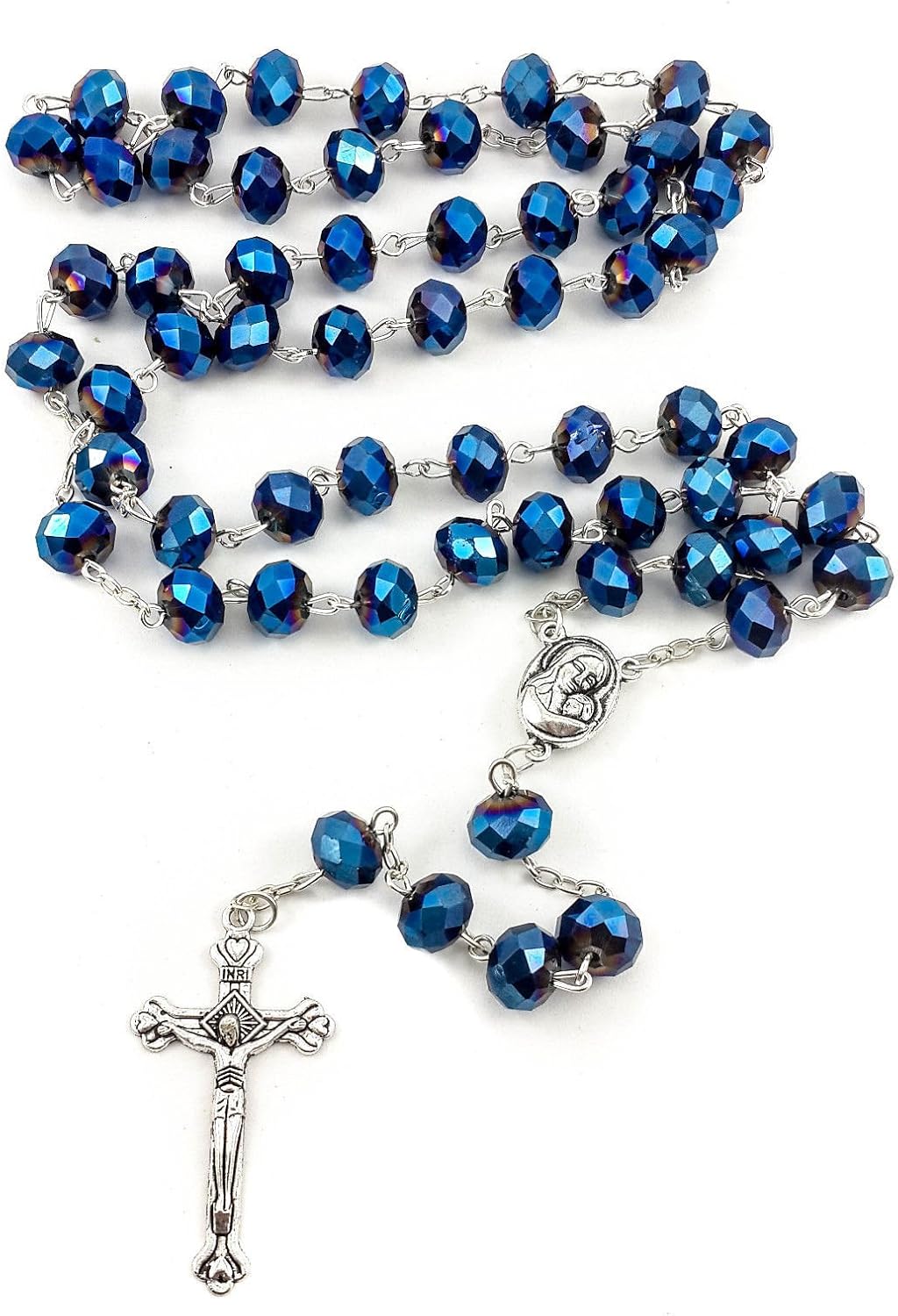
Another set was made of green glass, with a small shamrock medal. I remember bringing those beads to a hospital waiting room once, when a family member was undergoing surgery. The room was full of quiet worry, half-finished cups of coffee, and soft beeping sounds from nearby machines. I did not pray perfectly that day. My mind kept wandering. Still, slowly moving from bead to bead helped me breathe and stay grounded. The texture and weight of those Ireland Rosary Beads made the waiting feel a little less empty.
Each set has carried its own memories: late-night prayers when sleep would not come, whispered Hail Marys in the car before big decisions, or a quick decade on a walk when words were hard to find. None of these were dramatic moments. They were just real life, with its mix of routine, joy, and worry. That is where the rosary quietly does its work—at the kitchen table, in the car, on the couch, or in a quiet corner of the yard.
Traditional Irish symbols on the rosary
It can be helpful to understand a few of the symbols often found on Ireland Rosary Beads, especially if you are looking for a design that speaks to your own story or family background.
Shamrock and St. Patrick
The shamrock is closely tied to St. Patrick and to the Christian story in Ireland. According to tradition, he used the three-leaf shamrock to explain the mystery of the Trinity in simple terms that ordinary people could grasp. Today, a small shamrock on a rosary centerpiece can be a way of staying connected to that long history of faith lived in simple, everyday ways.
The Celtic cross
Many Irish rosaries feature a Celtic cross on the crucifix or on small medals along the chain. The circle around the cross is often seen as a symbol of eternity or of God’s everlasting love, though interpretations vary. For many Catholics of Irish background, the Celtic cross also calls to mind old stone crosses in the countryside and churchyards, where generations have stopped to pray.
The Claddagh and family love
The Claddagh symbol—hands holding a heart topped with a crown—is another design sometimes woven into Ireland Rosary Beads. It traditionally represents love, loyalty, and friendship. On a rosary, it can be a quiet way of praying for family, marriage, and lasting commitments. I once knew an older couple who kept a Claddagh rosary in their living room; every night they would pray at least one decade together, often for their children and grandchildren.

Choosing Ireland Rosary Beads for your own prayer
When thinking about Ireland Rosary Beads for yourself or someone you love, it may help to keep a few gentle questions in mind. This is not about finding the “perfect” rosary, but about finding one that fits the way you really live and pray.
- Where will you mostly keep it? In a pocket, bag, car, or at home?
- Do you prefer a light touch or a bit of weight? Glass, stone, and metal feel different from wood or plastic.
- Are you hard on things? If so, a sturdy chain and secure links matter.
- Do Irish symbols matter to you? Shamrocks, Celtic crosses, and Claddagh designs can add a personal connection.
- Will others use it too? For family rosaries, a design that everyone likes can help.
None of these questions has a right or wrong answer. They simply help you picture how the rosary will fit into your daily life. The most important thing is that you feel comfortable actually using it—slipping it into your hand on ordinary days, not just on special occasions.
Using Ireland Rosary Beads in family traditions
For many Irish-American families, the rosary is tied to specific moments: wakes, anniversaries of deaths, difficult diagnoses, moving to a new home, or gathering before a long trip. In those times, someone will quietly say, “Let’s say a rosary,” and the beads come out of drawers and pockets.

In my own family, Ireland Rosary Beads have often appeared at times of loss. At a wake for an elderly relative, we gathered in a small funeral home room. Someone produced a worn set of green beads that had belonged to a great-aunt. As the rosary went around the room, different family members took turns leading decades. Some prayed confidently, some hesitantly, some with long pauses, but everyone was held together through the rhythm of the beads and the familiar prayers.
Those moments stay with you. They remind you that the rosary is not just a private devotion but also a way of holding one another before God. A simple set of Ireland Rosary Beads can become a thread that runs quietly through the story of a family—present in joys, sorrows, and all the normal days in between.
Caring for your Ireland Rosary Beads
Because rosaries are handled so often, they tend to show their age. Links loosen, finishes wear away, beads pick up small scuffs. For many Catholics, these signs of use are not a problem; they are memories. Still, a little care can help keep Ireland Rosary Beads in good condition for regular prayer.
- Keep them in a small pouch or box when not in use, especially if you carry them in a bag with keys and coins.
- Wipe them gently with a soft cloth from time to time, especially if they are metal or stone.
- Avoid soaking them in water or cleaning chemicals, which can weaken cords and dull finishes.
- If a link seems loose, consider asking a local jeweler or someone handy with small tools to tighten it.
- If the rosary breaks, see it as an opportunity to repair it or pass it on to someone who can reuse the parts.
Many people keep one “sturdy everyday” rosary and one “keepsake” rosary that carries deeper personal or family meaning. Ireland Rosary Beads can easily fill either role, depending on how you use them.

A quiet Irish devotion in modern times
It can feel strange to speak of something as old-fashioned as the rosary in a world full of constant notifications and quick distractions. But the rosary has survived wars, poverty, migration, and cultural change. In Ireland, it continued in cottages, city flats, and small-town churches even when public life was unsettled. That same steady, simple devotion still has a place in American life today.
If you have a connection to Ireland—through family, through a visit, or simply through affection for its history—you may find that Ireland Rosary Beads help you carry that connection into your prayer. The beads can be a bridge between where you live now and the places and people who shaped your faith long before you were born.
I have sometimes found myself praying the rosary on a busy train or in a crowded waiting room and thinking of how many generations before us did the same thing in very different places: on ships crossing the Atlantic, in small coastal towns, in city neighborhoods where immigrants first arrived. The beads link us not only to God but also to a long line of ordinary Catholics who prayed before us.
Frequently asked questions about Ireland Rosary Beads
1. What makes Ireland Rosary Beads different from other rosaries?
Ireland Rosary Beads usually share the same basic structure as any other rosary—five decades, a crucifix, and a centerpiece—but they often carry Irish symbols and materials. You might see green glass or stone that calls to mind the Irish countryside, Celtic cross designs, shamrocks, Claddagh symbols, or Gaelic inscriptions. For many people, this gives the rosary a sense of heritage and family story that feels especially personal.
2. Do I need to be Irish to use Ireland Rosary Beads?
No. The rosary is a prayer of the whole Church, and anyone can use a rosary with Irish designs. Some people choose Ireland Rosary Beads because they have Irish roots; others simply feel drawn to the symbols or the beauty of the designs. What matters most is the intention with which you pray, not your ancestry. The beads are simply a tool to help you stay focused and faithful in prayer.
3. Are Ireland Rosary Beads meant for daily use or for special occasions?
They can be used for both. Some people keep a more delicate or ornate Irish rosary in a special place and take it out for family gatherings, wakes, or significant anniversaries. Others prefer a sturdy, simple set as their everyday rosary for pockets, purses, or glove compartments. There is no rule. You can decide what feels right for your own life and routine.
4. Can Ireland Rosary Beads be a meaningful gift?
Many Catholics quietly give rosaries as gifts for sacraments, birthdays, weddings, or times of loss. Ireland Rosary Beads can hold particular meaning for someone with Irish heritage or affection for Irish culture. A rosary is not a guarantee of any spiritual outcome, of course, but it can be a thoughtful way of saying, “I am praying for you, and I hope these beads help you pray too,” without many words.
5. Is there a “right” way to start praying with Ireland Rosary Beads?
The basic structure of the rosary is the same with any set of beads, Irish or otherwise. Many people find it easiest to begin with one decade a day, perhaps during a walk, commute, or just before bed. If you forget a day or lose focus, simply begin again when you can. Prayer grows slowly, like any habit. The beads are there to guide your fingers one prayer at a time, nothing more complicated than that.

A simple invitation to steady prayer
The rosary has been part of Catholic life for centuries. In Ireland, it survived in times when churches were hard to reach and public expressions of faith could be costly. In the United States, it crossed the ocean in the hands of immigrants and found a home in city apartments and rural farmhouses alike. Ireland Rosary Beads are one small continuation of that story.
You do not need to wait for a special occasion to begin using them. You might start with a decade on your lunch break, a quiet mystery before sleep, or a few Hail Marys when worries crowd your mind. Over time, the beads can come to feel like an old friend—always nearby, always ready, asking nothing more than your honest, imperfect presence before God.
If you wish, you can read more about the history and meaning of the Holy Rosary, which has shaped so much of Catholic prayer across centuries and cultures.
