

The classic answer: how many beads?
When people ask, “How many beads on a rosary?” they usually mean the traditional five-decade rosary that many of us keep in a pocket, a purse, or hanging from a bedpost. On that familiar rosary there are 59 beads in total.
Those 59 beads are arranged in a way that is simple and steady:
- 1 crucifix
- 1 set of 5 beads on the short “tail” (1 large, 3 small, 1 small closer to the centerpiece)
- 1 centerpiece, often showing Mary or another sacred image
- 5 groups of 10 beads each, called decades (50 beads total)
- Between each decade, 1 larger bead for the Our Father (5 in total)
That rhythm of ten small beads and one larger bead, repeated five times, makes the rosary feel like walking along a steady path. The number of beads is not random. It helps us keep track without staring at a book or a screen. Little by little, the hands lead the heart.
Why the structure matters in real life
Knowing how many beads are on a rosary is not just a trivia point. It can actually ease some quiet worries we carry. I remember years ago, when I first tried to pray the rosary regularly, I was anxious about “doing it right.” I kept losing count. I worried I would skip a bead or say the wrong prayer. The whole thing felt heavier than it needed to be.
One day an older woman at our parish smiled and said, “Just follow the beads. That is what they are for.” Something simple clicked in me. The 59 beads were not a test to pass; they were a gentle guide. From then on, feeling each bead became less like counting and more like breathing.
Every time we move from one bead to the next, we are invited to slow down just a little. The structure of the rosary gives us a way to pray when we are tired, distracted, or unsure what to say. The beads carry the pattern so the mind can rest.
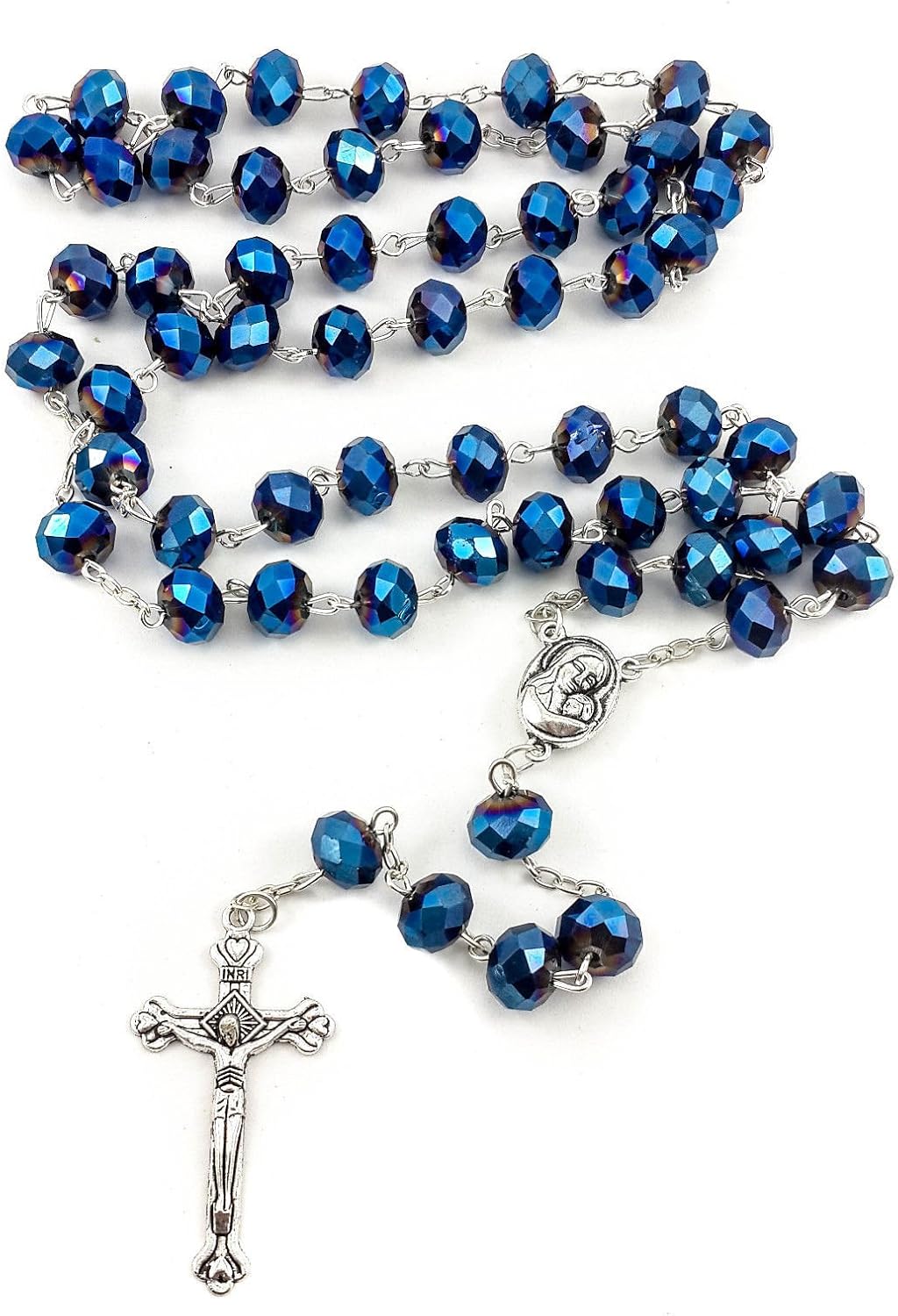
Walking through a standard rosary, bead by bead
Let’s go slowly through a typical five-decade rosary, using the number of beads as our guide.
The crucifix and the first beads
We start with the crucifix, then move up the short section before the circular part. On most rosaries, that section has:
- 1 large bead (often used for the initial Our Father)
- 3 small beads (often used for three Hail Marys)
- 1 small bead just before the centerpiece
These first beads help us ease into prayer, almost like stepping from the noise of the day into a quiet hallway. Even if you forget exactly which prayer is meant for which bead at the beginning, the simple act of touching them in order can steady the heart.
The five decades: 50 beads in the heart of the rosary
After the centerpiece, we enter the main circle: five sets of ten beads, with a larger bead between each set. These 50 small beads are where most of our time is spent. Many of us find that our mind wanders here. That is all right. The beads remain, waiting quietly for us to return.
Knowing there are 10 beads in each decade can bring comfort. If you lose count, you simply pause, feel where you are, and gently begin again. Some days I silently accept that a decade may have had nine Hail Marys, or maybe eleven. The Lord knows my intention better than my arithmetic.

Different types of rosaries and their bead counts
Not every rosary looks the same, and the number of beads can change depending on its purpose. Once we understand the standard 59-bead rosary, other variations make more sense.
Single-decade and pocket rosaries
Some people carry a single-decade rosary, sometimes called a pocket rosary or a decade ring. These usually have:
- 10 small beads
- 1 larger bead (or a cross) to mark the Our Father
These little rosaries are often used while walking, during a lunch break, or while waiting somewhere. I keep a small decade rosary in my car. When traffic is slow and my mind starts to spin with worries, I can reach for it and quietly pray one decade at a time. The smaller number of beads is still rooted in the same pattern as the full rosary.

Rosary bracelets and rings
Rosary bracelets often have 10 beads, plus a small charm or cross. Rosary rings usually have 10 little bumps or marks around the ring and a cross at the top. In both cases, the idea of the decade remains. The number of beads is enough to hold one small mystery of Christ’s life and Mary’s companionship.
A rosary bracelet or ring can be a quiet way to weave prayer into work, errands, or travel. The bead count is minimal, but the meaning is the same: one prayer at a time, one bead at a time.
Chaplets and special devotions
There are also chaplets—special sets of beads for particular devotions. Their bead counts can vary a lot. Some have 33 beads, some more, some fewer. Each devotion has its own pattern. Still, the idea is similar: a physical guide that keeps our hands and hearts moving gently through prayer.
When you first pick up a chaplet, it can help to simply count the beads and notice how they are grouped. That little act of curiosity can remove the fear of “doing it wrong.” You begin to see the chaplet as a friend rather than a puzzle.

Personal experiences of praying with the bead count
When I first tried to understand how many beads on a rosary, it felt very technical. I almost treated it like a math exercise. But over time, the numbers became more like a familiar melody than a calculation.
On nights when I cannot sleep, I sometimes pick up my rosary and promise myself I will just hold it, not pressure myself to finish all five decades. Often I begin with the crucifix and slowly work through the first few beads. I tell myself, “Just one decade tonight.” Knowing that there are exactly ten Hail Mary beads in that decade makes the prayer feel manageable. It is not a huge task. It is simply ten gentle steps with the Lord and with Mary.
There was a season when a family member was very sick. I used to sit in the hospital waiting room with the rosary in my pocket. I would slide my hand down to the first small bead, pray quietly, and then feel each bead, one by one. Sometimes I could only manage a decade before my mind drifted back to worry. Yet the beads remained the same. The clear number gave my anxious heart something solid to hold.
In those moments, I realized that knowing how many beads on a rosary is less about rules and more about mercy. The steady pattern invites us back, no matter how many times we drift away.
Choosing a rosary with the bead count in mind
When you look at different rosaries, you might notice variations in size, material, or design, but the basic pattern of the beads usually stays the same. Wood, glass, cord, metal—each has a different feel in the hand. The number of beads, though, still quietly supports the same rhythm of prayer.
For someone starting out, it can help to choose a rosary where the larger beads between decades are easy to feel. That way, the fingers can tell when a decade has ended, even in the dark or while walking. If eyesight is weak, larger beads or more spacing might make it easier to follow the 59-bead pattern without strain.
I once had a very small, delicate rosary that looked beautiful but was hard to handle. The beads were so tiny that I kept skipping them without meaning to. Eventually I chose a sturdier rosary with bigger beads. The prayers felt less rushed, and my hands could relax. The number of beads had not changed, but the experience of each bead had.

Letting the beads shape a gentle habit
Many people feel overwhelmed by the idea of praying the full rosary every day. When you remember that a standard rosary has 59 beads, you can also remember that each bead is just one small moment in time. You do not have to pray all the beads at once.
Some people pray a decade in the morning, another at lunch, another in the evening, and so on. The rosary then becomes a thread that runs quietly through the day, rather than one long task. The number of beads helps mark these little pauses, so prayer can slip in between work, family, and rest.
When I am especially busy, I sometimes tell myself, “Just reach the next large bead.” That means ten Hail Marys, no more. Often, by the time I reach that bead, my heart is calmer, and I am willing to keep going. Other times, I simply stop there and trust that it was enough for that day.

In the end, learning how many beads on a rosary is a way of becoming more at ease with the prayer. The numbers are simple: 59 beads on a traditional rosary, 50 of them in decades, with other forms like single-decade rosaries and chaplets following their own patterns. Behind those numbers, though, is something quieter: an invitation to walk step by step with God, at a pace your heart can truly carry.