
Are Rosary Beads Made from Roses
Many Catholics quietly wonder if rosary beads really come from roses, or if that is just a beautiful image we grew up with. Here you will find a calm, honest look at where rosaries come from, how some are actually crafted from roses, and how different kinds of rosaries can gently support daily prayer.
The question “are rosary beads made from roses” usually appears in a simple moment: holding a rosary that smells faintly like flowers, noticing a bead shaped like a petal, or remembering a story a grandparent once told. For many of us in the United States, rosaries have been part of our lives since childhood, yet we may never have really learned what they are made of or why some carry the scent of roses.

Most rosary beads today are not literally made from roses. Many are crafted from wood, glass, metal, stone, or simple plastic. Yet there is a real tradition of rosaries made from rose petals or from rose-scented materials, and those rosaries carry a special place in Catholic devotion. The link between roses and the rosary runs deep in our history and imagination, even when the beads themselves are very ordinary.
I remember the first time I held a rosary that truly smelled like roses. It belonged to a friend’s grandmother. The beads were a muted red, slightly uneven, and when I rolled them between my fingers, a gentle rose fragrance rose up. She told me the rosary had been made from dried petals of roses she had saved from family celebrations and times of prayer. That simple story stayed with me. It made the question “are rosary beads made from roses” feel less like a curiosity and more like a doorway into a quiet family tradition.
Where the Connection Between the Rosary and Roses Comes From
The link between the rosary and roses is not an accident. The very word “rosary” is tied to the image of a garland or “rose garden” of prayers offered to Mary. Over time, artists and writers began to picture each prayer as a rose. When we ask “are rosary beads made from roses,” we are touching this old and tender idea: that each bead is like a small flower placed into the hands of Our Lady.
Of course, you do not need beads made from roses for your prayers to be sincere. A simple plastic rosary prayed with attention often means more than an expensive one left forgotten in a drawer. Still, many people are drawn to rosaries that echo the beauty and scent of real roses. They can serve as a gentle reminder of the dignity of prayer and the loving care with which we want to approach God.
For a bit of background on the devotion itself, some people like to read about the history of the Rosary prayer tradition and how it developed in the life of the Church. This context can make the question about rose beads feel part of a much longer and richer story.
Types of Rosaries That Involve Roses
When we ask if rosary beads are made from roses, the honest answer is: some are, some are not, and many are somewhere in between. Here are a few common ways that roses enter into the making of rosaries.
Rosaries Made from Pressed or Molded Rose Petals
One traditional way of incorporating roses is to take dried rose petals, grind or press them, and mix them with a binding material to form beads. These beads are often a deep reddish-brown, sometimes with visible flecks from the petals. Over time, they may keep a soft rose fragrance, especially when warmed by the hand.
These kinds of rosaries are sometimes made from petals kept from weddings, funerals, anniversaries, or special moments of prayer. I once knew a family who collected every rose left at their parents’ graveside. A relative later had a rosary crafted from those petals. Whenever they prayed it, they felt simply “close” to those memories. Not in a magical way, just in the sense that the rosary carried both love and grief together before God.
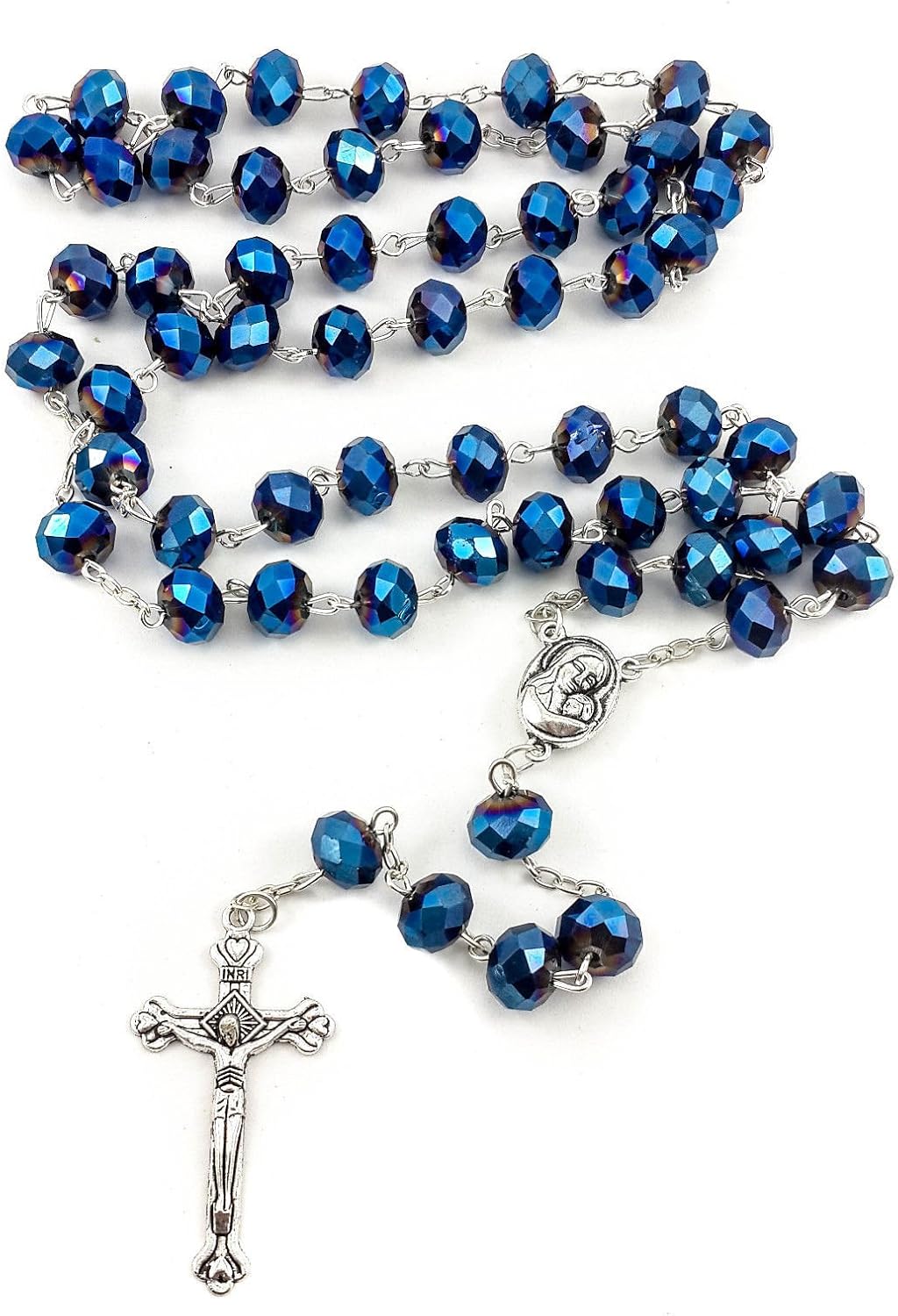
If you ever hold a rosary like this, you may notice that the beads feel slightly warmer and more organic than glass or metal. The scent, if it remains, can be subtle. Some people find it fades over time, while others notice it again whenever they return to the rosary after a break.
Rosaries with Rose-Scented or Rose-Shaped Beads
Another way that “rose” enters the rosary is through scented beads. These beads are not actually made from petals but are infused with rose fragrance. They may be plastic, wood, or another material, sometimes shaped like tiny roses. When someone asks, “are rosary beads made from roses,” they might be holding one of these scented rosaries and simply wondering how the fragrance got there.

These rosaries can be especially comforting during quiet evening prayer or in times of stress, simply because familiar scents often calm the mind. The fragrance does not make the prayer holier, but it can gently draw our attention back to the moment and remind us that what we are doing is something set apart.
Rosaries Decorated with Rose Motifs
Many rosaries that are not made from roses at all still carry rose designs. A crucifix may have roses carved into it. The centerpiece may show Our Lady surrounded by roses. Some beads are shaped like rosebuds even if they are made of metal or glass. These details keep the symbolism alive, even when the materials are simple.

My own everyday rosary right now is not made from roses. It is a simple wooden one with metal links, but the centerpiece has a small rose on one side. When I notice it, I think again of the old idea of each prayer being a flower. That quiet detail is enough to remind me why the tradition of rose rosaries exists in the first place.
How Materials Shape the Experience of Prayer
Whether or not rosary beads are made from roses, the material does influence how we experience prayer. Different textures, weights, and scents can either distract or gently support our focus. The right choice is usually the one that helps you pray with peace.
Wooden beads tend to feel warm and humble. Glass and crystal catch the light and can feel more delicate. Metal rosaries are sturdy and reassuring in the hand, often good for pockets and backpacks. Rose-petal or rose-scented rosaries add another sense into the experience. None of these are better or worse in themselves. It often comes down to personality, habit, and what you find calming.

When I first began praying the rosary more regularly, I used a plastic one from a parish basket. Later, someone gave me a rose-scented rosary. I noticed that I treated it a little more gently, simply because it felt special. Over time, though, I realized that what truly changed my prayer was not the scent but the steady rhythm of coming back to the beads day after day, even when I was distracted or tired.
So when people ask “are rosary beads made from roses,” I often think their deeper question is whether the “right” kind of rosary will make their prayer better. From what I have seen in my own life and in others’, the most important thing is to pick a rosary you are actually going to hold, at your kitchen table, in the car, on a lunch break, or during those quiet moments before bed.
Everyday Ways to Use a Rosary, Rose or Not
A rosary made from roses can feel like a beautiful gift, but any rosary can accompany daily life. Some people carry theirs in a pocket and simply finger one decade when they walk. Others keep a rosary next to a favorite chair and turn to it when worries start to pile up. Parents sometimes hang a rosary where children can see it and touch it, reminding them that prayer is part of ordinary family life.
In my own routine, the rosary often comes out at night when the house is finally quiet. Sometimes I pray a full set of mysteries; other times I manage only a decade or two before sleep. The material of the beads matters less in those tired moments, but I will admit that on difficult days, reaching for a rosary with a gentle rose scent does feel like reaching for something tender and familiar.
Some families like to reserve a more delicate rose-petal rosary for special days—feast days of Our Lady, anniversaries, or important family intentions—while using sturdier rosaries for pockets, cars, and backpacks. This can be a simple way of marking special times without turning it into a rule or a burden.
Caring for Rosaries Made from Roses
If you do have or are considering a rosary made from roses, a little care can help it last longer. Beads made from pressed petals or infused with fragrance are often more sensitive to moisture, direct sunlight, and rough handling.

Many people keep their rose rosaries in a small pouch or box when not in use. This helps protect the beads and preserve any remaining scent. Wiping them gently with a soft, dry cloth is usually better than using water or cleaning products. The metal parts may age over time, but that patina often becomes part of the rosary’s character.
It is normal for the fragrance of rose beads to fade. This does not mean the rosary has lost its meaning. Sometimes, the very aging of a rosary becomes part of our spiritual memory. We remember how strong the scent once was, or how bright the color used to be, and we realize how many prayers and years are now bound up in that simple object.

In that sense, whether rosary beads are made from roses or not, they eventually become “soaked” in the quiet history of the person who uses them. The material is just the starting point; the life of prayer is what gives the beads their deepest meaning.
FAQs About Rosary Beads and Roses
1. Are rosary beads really made from roses?
Some rosaries are truly made from roses, especially those crafted from dried and pressed petals mixed with a binding material. Others are simply rose-scented or shaped like roses, while many have no physical connection to roses at all. The spiritual tradition links the rosary to roses as a symbol, even when the beads are made from wood, glass, or other materials.
2. Do I need a rose-petal rosary for my prayer to “count”?
No. A rosary made from roses is a beautiful option, but not a requirement. A simple, sturdy rosary can be just as fitting for daily prayer. What matters most is the intention of the heart and the quiet consistency of turning to God through these prayers, not the specific material of the beads.
3. Will the rose scent on my rosary fade over time?
It is very common for the fragrance on rose-petal or rose-scented rosaries to fade, especially with frequent handling and exposure to air, heat, and light. Storing the rosary in a small pouch or box can help the scent last a bit longer, but some fading is natural and does not reduce the value of the rosary as a tool for prayer.
4. Is it disrespectful to carry a delicate rose rosary in my pocket or bag?
It is not inherently disrespectful, but delicate rose-petal beads can be more fragile than wood or metal. Many people choose a sturdier rosary for pockets, cars, and backpacks, and keep more delicate rose rosaries in a safer place for quieter moments of prayer at home or in church. This is more about practical care than about strict rules.
5. How can I choose between a rose rosary and a regular one?
It may help to think about how you realistically plan to use your rosary. If you often pray on the go, a strong wooden or metal rosary might fit best. If you are drawn to the symbolism of roses and mostly pray at home, a rose-petal or rose-scented rosary might feel meaningful. Some people keep more than one type, using each in the setting where it fits most naturally.
If you are quietly considering different rosaries—whether made from roses or not—it can be helpful to take your time, notice what gently draws your heart, and imagine which beads you will actually reach for on an ordinary day.
Let me see everything